|
 Keweenaw County Keweenaw County
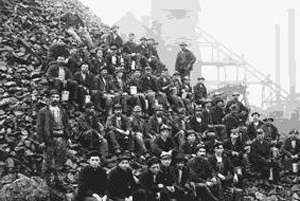
In the 1840s, hundreds of people moved into the Keweenaw, a small, rugged peninsula, jutting sixty miles into Lake Superior. They came for copper, participating in the nation’s first mineral rush.
The copper rush led to the organization of the Keweenaw Peninsula into Houghton County in 1847. In 1861, Houghton County broke off, and the northern tip of the Keweenaw Peninsula became Keweenaw County.
Explorers had known of the presence of copper in the area long before 1840. French explorers reported that Indians were collecting copper on the Keweenaw in the 1600s.
But it wasn’t until Douglass Houghton’s survey cited the region’s copper potential that Congress purchased the Keweenaw Peninsula from the Chippewas, and mining by whites began.
In 1843, the U.S. Mineral Agency opened an office at the location of present-day Copper Harbor, and the first mining permits were issued.
The agency over-issued permits, resulting in far too many people flowing into the small peninsula. Disorder followed.
In 1846, John Forster, who was visiting Copper Harbor, wrote that “card playing, the use of the ‘flowing bowl,’ and some good fighting with fist and pistol, were the amusement of this community.”
It was further said that there was no Sunday west of the Sault.
In 1845, the federal government erected a fort at Copper Harbor to bring order to the community and to protect the miners.
Another purpose of the fort was to “encourage the migration of the Indians from Michigan when the time for their removal comes.”
|